Home
Blog
What to do when perimenopause and menopause don't just affect how you feel, but also take away your thick hair?
What to do when perimenopause and menopause don't just affect how you feel, but also take away your thick hair?
12.10.2026
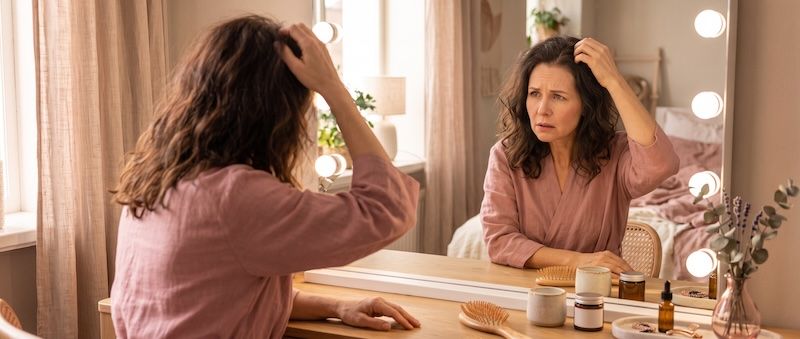
Have you recently noticed more hair left in your hairbrush than usual, or thinner areas appearing around your temples? Perhaps you've noticed that your ponytail feels thinner or your scalp shows through your hair in certain lighting.
If you answered yes, two things are important to know: first, this is incredibly common, and second, you don't have to simply accept it as inevitable.
We often attribute hair thinning in women to stress or a poor diet, but one of the primary (and least discussed) causes is hormonal changes that begin in perimenopause—often years before actual menopause. Let's take a closer look at why this happens and what practical, science-based steps you can take to support your hair health.
The Biology Behind Your Hair: Why Does Hair Thin?
Your hair's growth and density are dictated by a delicate hormonal balance. The main "hair-friendly" hormone in a woman's body is estrogen. It helps keep hair in the growth (anagen) phase longer, ensuring hair density and vitality.
During perimenopause and menopause, estrogen levels gradually begin to drop. As a result, two main things happen to your hair:
- A shorter growth phase: Hair no longer stays on your head as long as it used to. The growth phase is shortened by half, causing hair to transition into the resting phase faster and fall out. This is why you might suddenly notice more hair in the drain or on your pillow.
- Hair strand thinning (miniaturization): When the protective effect of estrogen declines, male hormones (androgens) present in the body can begin to affect hair follicles. The follicles shrink, meaning that each new growing hair strand is thinner, shorter, and more fragile than the last. Eventually, the follicle may stop producing hair altogether.
The result is an overall thinning of hair, especially at the crown and temples.
A Holistic Approach: How to Support Your Hair During Perimenopause and Menopause
Because the root cause of hair thinning is internal, simply buying a new shampoo is often not enough for lasting results. You need a strategy that nourishes hair follicles from within and creates a favorable environment on your scalp.
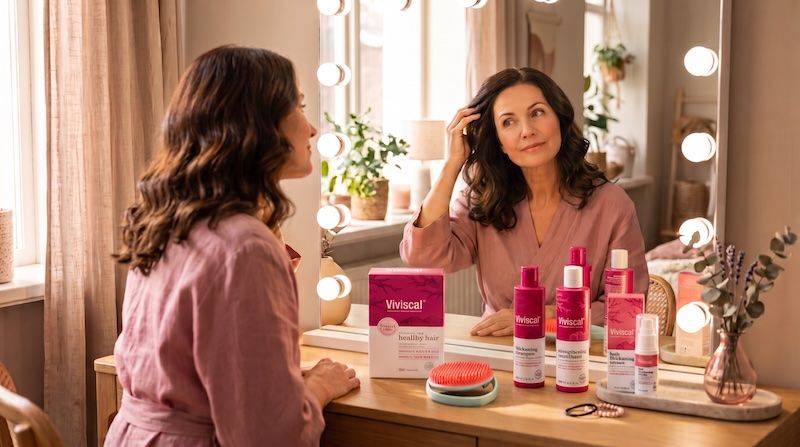
Here are four steps worth incorporating into your routine:
- Nourishing the Hair Root from Within (Supplements)
As hormonal balance shifts, the body needs specific building blocks to keep hair follicles active. Clinically proven ingredients—such as certain marine proteins, vitamins (like biotin), and minerals (like zinc)—can support normal hair growth.
The goal of supplements is to supply the hair root with nutrients via the bloodstream, thereby extending the anagen (growth) phase. On the e-shop Loveby.ee, you can find Viviscal Max Strength supplements (available as a one-month supply or a three-month) course, which are specifically formulated to nourish hair from within.
2. Gentle Scalp Cleansing (Choosing the Right Shampoo)
The drop in estrogen associated with menopause can make the scalp drier and more sensitive. Harsh cleansing agents (sulfates) in regular store-bought shampoos can weigh down and stress already fragile hair.
Look for a shampoo specifically formulated for fine and thinning hair. The goal is to cleanse the scalp of excess sebum and dead skin cells (which can clog follicles) without drying out your hair. For instance, Viviscal Densifying Shampoo offers gentle cleansing, creating an optimal environment for new hair growth.
3. Strengthening the Hair Strand and Adding Volume (Conditioner & Serum)
Since new hair strands tend to be finer and more fragile, they need extra protection from external damage.
A conditioner's role is to seal the hair cuticle, reducing breakage. Viviscal Conditioner hydrates hair without weighing it down.
After washing, a leave-in scalp serum like Viviscal Elixir helps deliver extra nutrients directly to the roots while creating an instant illusion of thicker hair.
4. Stimulating Scalp Circulation
For all the beneficial nutrients from supplements and serums to actually reach the hair roots, scalp blood circulation must be optimal. Regular scalp massage is a simple yet highly effective method.
Technological advancements have also brought light therapy (LED) into home care. Red LED light can penetrate beneath the skin to stimulate cellular energy production, which in turn supports hair follicle activity. The Foreo FLIP™ 4 Play Advanced LED Light Hairbrush delivers this therapy right at home.
Give Your Hair (and Yourself) Time
The most important thing to remember is that the hair growth cycle is slow. Regardless of the approach you choose, don't expect miracles overnight. "Awakening" follicles and growing new, stronger hair strands takes time. Typically, the first noticeable results—less hair shedding and the appearance of new "baby hairs"—begin to show around 3 to 6 months.
Perimenopause and menopause are natural life stages. By understanding the biology behind the changes happening in your body and taking conscious steps to support your hair, you can regain control and navigate this stage of life with greater confidence.